Bin Collection

Why was my bin only half emptied?

Although our team try their best to collect all the contents of your bins, sometimes things can get stuck, even after the arms of the truck have shaken them multiple times. 

Here's a few tips to help stop this happening to your bins:

  • Don't overfill your bins. The more things you stuff into your bins, the harder it is for them to come out. 
  • Try going plastic bag free. Plastic bags not only take up more space in your red rubbish bin, but they can also stick to the sides of the bin.
  • Make sure there's no wet paper or cardboard in your bin.
  • Put heavy items at the bottom of your bins, so when they are tipped upside down by the truck, gravity does the rest. 

Why wasn't my bin collected?

Make sure the correct bins are out on the kerbside by 7am and the correct items are in each bin. Please keep lids closed and don't overfill your bins. If you did all these things but your bin still wasn't emptied, please report a missed collection here,  or call our Customer Services team on 07 838 6699. Please wait until the end of the day to report a missed collection as our contractors can be out collecting until the early evening. If there was a tag on your bin, please click here.

How will I fit all the bins on the kerb?

You will never have to put all four bins out at once. The red bin is collected once a fortnight, on alternate weeks to the yellow bin and glass crate. The food scraps bin is small and is collected weekly.

  • Red week = red rubbish bin and green food scraps bin.
  • Yellow week = yellow recycling bin, blue/green glass crate, green food scraps bin.

If you have limited kerb space, feel free to put your glass crate and/or food scraps bin behind your wheelie bin – these are collected by hand. The wheelie bin must be kerbside so it can be picked up by the truck.


Why was there a tag left on my bin?

A bin inspector randomly checks recycling bins each week to see if the correct items are inside. Once inspected, a tag will be left on your bin to help you become a recycling champion.

  • A green tag means everything in your bin was recyclable – well done!
  • An orange tag means there were some non-recyclable items in your bin. Your bin was still collected, but please double-check what goes where.
  • A red tag means there were lots of non-recyclable items in your bin, so it wasn’t collected. Remove non-recyclable items and place the bin out again on its next collection cycle.If you get two red tags within three months, we’ll send a letter to explain what was wrong. If there’s a third red tag in the three month period, Hamilton City Council may suspend your kerbside collection service.

When do I put my bins out?

Make sure the bins are out on the kerbside by 7am on your collection day. Bins shouldn't be out before 5pm the night before and need to be brought back inside your property no later than 7am the day after they've been collected.

Service information

Can I still put black bags out on the streets?

No, black rubbish bags are no longer collected if they are placed on the street - they will need to go in your red rubbish wheelie bin or taken to your nearest refuse transfer station for a fee.

What if I need a new set of bins?

Each property is entitled to one set of bins. The bins belong at the property and must remain there if you move house.

If you have just moved house or have moved into a new build and there are no bins on the property please contact us on 07 838 6699 or info@hcc.govt.nz and our team will look into organising bins for the property. If you can, please talk to the previous property owner first to see if they took the bins by mistake. If the property is a rental please contact the property manager or landlord as it is their responsibility to pay for replacements.

If you suspect that your bins have been stolen or have been damaged please get in touch with us within 5 days on 07 838 6699 or info@hcc.govt.nzand our team can look into this for you. Please keep in mind that there may be a fee for replacement bins. The wheelie bins and food scraps bin have an embedded radio-frequency identification (RFID) tag so if they're found we may able to return them to their owner.

Can I get assistance to help manage my bins?

We offer an assisted collection service to eligible residents who are unable to manage the bins. This involves the waste collector coming onto the property, moving the bins and crate to the truck for emptying, and returning them to the property.

To apply, please contact our Customer Services team on 07 838 6699 or info@hcc.govt.nz. Residents will need to complete an application form, attaching supporting medical documentation. 

How do I opt out of the new service?

Contact our Customer Services services team on 07 838 6699 or info@hcc.govt.nz and we will arrange to collect all your bins. Please note: you will still be rated for rubbish and recycling.

By opting out, you won't be receiving a kerbside rubbish and recycling collection service, and you will opt out of all four bins. You won't be able to opt in to receive part of the kerbside collection service, e.g. use the food scraps collection but not have the other bins.

There are private rubbish and recycling services available in Hamilton that you can organise at your own expense.

Can I opt out of the food scraps bin?

No. Bins are assigned to properties as a set of four. We recommend you continue with your home composting and use the food scraps bin for items that are not easily composted, such as meat, small bones, vacuum cleaner dust and shellfish. If you still don't want to use the food scraps bin, please store it somewhere in your home.

Can I get a larger or additional red landfill bin?

Each household is entitled to one 120L red lidded bin collected once a fortnight. Currently each household is charged for kerbside services through their rates. If the collection was to increase to weekly, the charge on rates would need to be increased. Excess rubbish can be taken to the Lincoln Street Resource Recovery Centre or you can arrange for a private collection at your own cost.

Where does our recycling go?

Your kerbside recycling is sorted into different materials at the Enviro NZ Hamilton Refuse and Recycling Transfer Station on Sunshine Avenue.

Paper, cardboard, glass, aluminium, and steel are all recycled onshore, as are plastics 1, 2, and 5.

Food scraps are collected and taken to a composting facility in Hampton Downs to be turned into compost.

Why is the red rubbish wheelie bin smaller than the yellow wheelie bin?

The size of the red rubbish wheelie bin was based on waste assessments and community consultations conducted in 2016 and 2017. This research found that the size of the bin would suit most Hamiltonians and also supports Hamilton’s 2024-2030 Waste Management and Minimisation Plan’s six-year targets of reducing rubbish to landfill and increasing recycling. From our 2023 waste audit we found most of the waste in the red bins was made up of recyclable and compostable items . In fact, 54% of what is still going in our red lidded kerbside rubbish bins doesn’t need to be going to landfill. We encourage you to use the yellow lid recycling wheelie bin, glass recycling crate, food scraps bin and reuse options which should limit the amount of rubbish going into your red bin (waste). If you have excess rubbish, you can take this to the  Lincoln Street Resource Recovery Centre.

What bin do I put this in?

If you're not sure where to put items, you can type them into our handy sorter tool, and we'll tell you what bins to put them into. You can find the sorter tool on the home page. If you can't find what you're looking for, let us know and we can help you to make sure it ends up in the correct bin.

Why can't I overfill my bins?

Overfilled bins and crates can create a safety hazard for people, animals and vehicles if bins get tipped over in the wind and items get strewn across the road. You may also find that if bins are overfilled, items can get stuck in the bins when the truck picks them up which may mean your bin isn't completely emptied. Handy tip: To get the most out of your red rubbish bin try going bag-less and put rubbish straight into the bin. Rubbish bags can fill up with air and take up space in the bin - they can also get stuck to the sides of the bin. Going bag-less is cheaper and better for the environment, so why not give it a go! 

What is contamination?

Contamination is when recyclable items get mixed with unrecyclable items. Contamination can come from: containers with food, oil, paint or other liquids, sanitary items and used nappies, food or green waste in them. Recycling is compacted in the collection truck, meaning anything soiled (like nappies or food waste) and liquid, will spread over everything it touches. This contaminates the recyclables and makes them unrecyclable, meaning it all goes to landfill.

Why do I need to rinse my recycling?

Recycling is sorted by hand, and when you don’t rinse recycling or add gross unrecyclables to your yellow lidded kerbside recycling bin, it can get smelly and unpleasant for the people sorting it.

What to put in your bin

Will I be able to recycle pizza boxes?

Yes, pizza boxes will be recycled in the yellow-lid wheelie bin. Please make sure you remove any chunks of food and cheese from your pizza box before putting it in the bin.

What plastics can I put in my yellow bin?

Only plastics 1, 2, and 5 are recycled onshore and can go into your yellow lid recycling bin. To check what number plastic your item is, look for a small triangle with a number inside it.

Examples of plastics 1, 2 and 5 include: milk, soft drink and juice bottles, large yoghurt containers, 2L hard ice cream containers, cream cheese, sour cream and cottage cheese containers (only those greater than 250g and excludes single pottles), some dip containers, and some tomato, BBQ and mustard squeeze bottles. It also includes meat trays and some takeaway containers.

Plastics 3, 4, 6, and 7 are difficult to recycle and there are limited recycling options for them in New Zealand or overseas. They made up less than 5% of plastics in the old kerbside recycling system.

Examples of plastics 3, 4, 6 and 7 include: small yoghurt/sour cream pottles, styrofoam, PVC pipes, polystyrene, biscuit and cracker trays, pill packets, some dip containers, soft plastics (plastics you can scrunch in your hand, biscuit and cracker bags and trays, bread, rice, potato bags, shiny gift wrap) and some tomato sauce, mustard and BBQ squeeze bottles.

What not to put in your bins

Can I recycle soft plastics?

Not as part of the kerbside collection service. Please DO NOT put soft plastics in your yellow bin as these can get caught in the machinery, causing damage, or get mistaken for paper/cardboard, leading to contamination of the recycling of those materials. The Soft Plastic Recycling Scheme continues to take these products - find out more here: https://www.recycling.kiwi.nz/solutions/soft-plastics

Can I put compostable products in my food scraps bin?

No, products like 'compostable' bags, coffee cups, and other packaging cannot go into the food scraps bin. This is because New Zealand does not currently have a standard for compostable or biodegradable plastic and can contaminate our food scraps composting system.

What do I do with batteries?

Batteries are not accepted in the new bins (including the red rubbish bin) because they are a health and safety hazard – they can cause fires and other issues in the collection trucks and when they get to the landfill. Dry cell batteries (AAA battery, lithium batteries, etc) and lead acid batteries (e.g. car batteries) will be accepted for drop-off at the Lincoln St Resource Recovery Centre.

Why can't lids go in my yellow recycling bin or glass recycling crate?

Lids from plastic and glass bottles and jars are too small to be collected and processed by the recycling machinery at our Materials Recovery Facility. If left on the recyclable materials, they can become a be a health and safety hazard as they can fall when the bottle/jar is processed and get caught in machinery causing blockages. 

Recycling drop-off points for lids are available free of charge at the Refuse Transfer Station on Lincoln Street. Lids placed in these bins will be processed separately from the kerbside recycling collection. Alternatively you can put lids in the red rubbish wheelie bin but they will be sent to landfill.

Where can I take hazardous materials?

There are a lot of products that are used around the home that are classed as hazardous substances. A hazardous substance is generally defined as any substance that is explosive, flammable, corrosive or toxic. These products need to be stored, used and disposed of correctly, otherwise they can potentially harm your health and the environment. Common household products that may include hazardous substances are: oil (motor and waste), e-waste, batteries (car, drycell and lithium), paint, cleaning fluids (bleaching agents, oven and drain cleaners), solvents (mineral turpentine, methylated spirits and paint thinners), adhesives (especially those containing solvents), garden chemicals (herbicides, fungicides and insecticides), pool chemicals, dyes (textile and hair), stored fuels (petrol, LPG, diesel and oil), old gas cylinders, car batteries, anti-freeze, and aerosols.

Disposing of hazardous substances

If you have unwanted household hazardous substances, you may be able to dispose of it at the Transfer Station on Lincoln Street. check the original container for instructions on how to dispose of the substance safety. don't pour unwanted chemicals down the sink, storm water drains or onto the ground.

Tips

Where do I take my excess waste?

If you have waste that is not able to fit in your kerbside bins, there are a few different options for disposal, dependent on the type of waste you have. Check out this page to find out where to take your items.

How do I prevent maggots in my food scraps bin?

The green food scrap bin can get smelly and can sometimes attract flies and maggots. Here's some tips to help keep it clean:

  • Line your bin with paper, newspaper or brown paper. Brown paper supermarket bags are good too. 
  • Store your bin outside in the shade with the lid locked.
  • You can use an ice cream container or compost caddy to store food scraps in the kitchen before putting them into the green food scraps bin. Make sure you store the caddy in the shade in a cool place like under the sink. 
  • If you have space you can store food scraps in the freezer until your collection day.
  • Wash your bin between collections.

How can I stop nappies from smelling?

Nappies belong in the red bin. Under no circumstances are they to be placed into any of the other bins.

There are a number of things you can do to minimise the odour in your bin:

  • Wrap the nappy into itself using the tabs.
  • Seal nappies tightly in brown paper bags before placing in the bin.
  • Store the red lid rubbish bin in the shade and out of direct sunlight, if possible.
  • Consider using odour neutralising products in your red lid bin, for example bicarbonate of soda. Or add a couple of drops of lavender or tea tree oil to the top of the lid.
  • If possible, tip the contents of the nappy down the toilet before disposing.
  • Consider using modern cloth nappies, which are a cost effective and environmentally friendly alternative to disposable nappies and they won't fill up your bin.

These measures seem to be working really well in other parts of New Zealand, where fortnightly collections have already been introduced.

Please note the weight limit for the red rubbish bin is 40kg.

Where will I store the new bins?

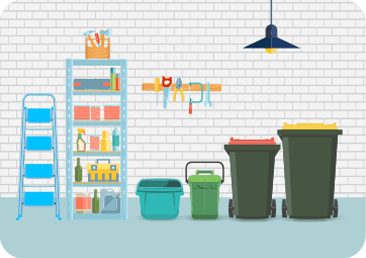
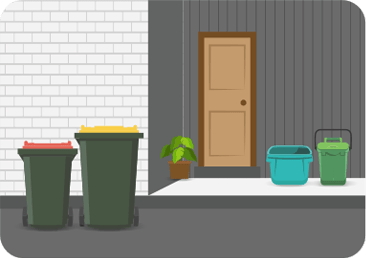
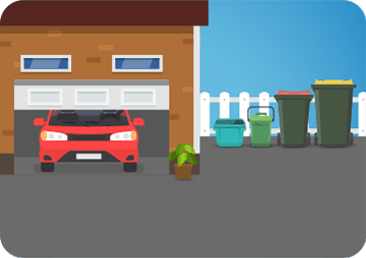
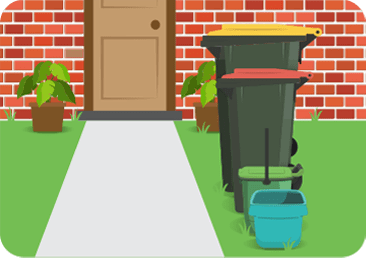
Placed side by side, all four bins take up approximately 2m in length. They are weather and animal proof (including a lockable lid on the food scraps bin), so they can be stored outside or inside. You don't have to store all the bins together in the same area. The ideas below are just suggestions to get you thinking creatively about where to store your own!

Bins inside garage


Bins in two areas


Bins outside the garage


Bins in back garden


Bins outside the front door


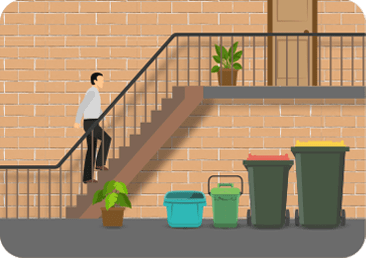
Bins under the stairs

Where will multi-unit dwellings and flats put their bins?

We understand that for some multi-unit dwellings or flats, storage and presentation space may be limited. We have worked with our contractor to assess these on a case-by-case basis and all of those we’ve assessed have enough public kerbside space to present the bins on collection day. Most also have service areas and/or parking areas where the bins can be stored, and we have provided some storage solutions here. We have also contacted property managers, owners and body corporates as necessary to advise some solutions.

To mitigate storage problems (where possible) for future developments, we have also been working alongside the Council’s planning department to educate developers about the new service.

How do I maximise space in my red bin?

Your red wheelie bin is for anything that cannot be reused or recycled. Here’s some tips to help maximise the space in this bin.

  • Make sure you’re using the other bins to separate your waste – plastics, tins, cans, paper and cardboard go in the yellow bin, glass bottles and jars in the crate, and all food scraps in the food scraps bin.
  • Leave out bin liners – liners such as black bags trap items, meaning there is wasted space between the bags when they’re placed in the bin. Putting rubbish straight into the bin (rather than in a plastic bag) maximises space, or if you keep a plastic liner in an inside bin then, once full, empty the contents of the bag into the red bin.
  • Don’t compact items in your bin too much – this might make it difficult for the materials to fall out and the bin to be emptied properly when lifted on collection.

February 2024 service changes

Why were plastics 1-7 collected when the service began in 2020?

When we put the tender out for the new kerbside services contract, overseas and local markets for the 'hard to recycle' plastics were open and plastics 1-7 were collected by all New Zealand councils. Between the tender going out and contract being finalised, the overseas markets had closed. With the contracts written, agreed upon, and with the potential for the markets to become viable, an agreement was made between Hamilton City Council and our current contractor to continue to collect 1-7, but separate out and dispose of hard to recycle plastics 3, 4, 6 and 7. Options remain limited for recycling hard-to-recycle plastics and now Ministry for the Environment has mandated Councils to no longer collect them as part of the Standardising Kerbside strategy.

Why are kerbside collections being standardised?

The Ministy of the Environment has mandated the change to improve the clarity and effectiveness of kerbside collections. This will reduce confusion about what can and cannot be recycled at the kerbside, no matter where you are in New Zealand, it also aims to divert more food waste from landfill. Learn more about standardising kerbside.

Does this affect recycling at Lincoln St Resource Recovery Centre?

Yes. Recycling collected at the Lincoln Street Resource Recovery Centre goes to the same sorting centre as kerbside so you will need to ensure you are only recycling plastics 1, 2 and 5 as well as paper, cardboard and clean tins and cans. There are separate bins for glass recycling. Recycling properly, by separating out what can actually be recycled is also just the right thing to do. There is no point in adding items to your recycling bin because you think they should or used to be recycled. This creates more work for the people who sort through recycling by hand. 


What are examples of hard-to-recycle plastics?

Plastics 3, 4, 6 and 7 include: small yoghurt/sour cream pottles, styrofoam, PVC pipes, polystyrene, biscuit and cracker trays, some food packaging, pill packets, some dip, cream cheese and sour cream pottles, soft plastics (plastics you can scrunch in your hand, bread, rice, packaging from fruit/vegetables, shiny gift wrap) and some tomato sauce, mustard and BBQ squeeze bottles.

What are examples of plastics 1, 2 and 5?

Soft drink, milk and juice bottles, large yoghurt containers, 2L hard ice cream containers, hygiene bottles (shampoo, conditioner, liquid soap), household cleaning bottles (spray and wipe, laundry liquid, dishwash liquid).     

Does this affect glass?

We will continue to collect glass, but only in the blue/green glass crate as normal. Glass is collected separately and sorted at a different facility to plastics, paper, cardboard, tins and cans. Glass shouldn't ever go into your yellow lidded kerbside recycling bin. Recycling is sorted by hand, and while the sorters follow health and safety protocols to protect their hands they don't want to come across broken glass.  

How can I tell what is recyclable and what isn't?

At the bottom of many bottles/containers will be a number in a triangle. If it has a number 1, 2 and 5, rinse it and put it into your yellow lidded kerbside recycling bin. If it doesn't have a number, you can't clearly see the number, or it's number is 3, 4, 6, and 7, put it into your red kerbside landfill bin.

Will the size of the bins need to change with fewer items now being recycled?

The hard to recycle plastics numbered 3, 4, 6 and 7, make up less than 5% of all plastics currently in the kerbside recycling. The Ministry for the Environment are encouraging consumers to be conscious about what they're buying. Buying plastics with a recycling number 1, 2, or 5, and leaving hard to recycle products 3, 4, 6 and 7 on the shelf, help keep plastic out of the landfill.

New service 2020

Why did the service change?

The new service will increase recycling options and divert more waste from landfill. This is really important given our city is growing and the environmental pollution from landfill reduces the amount of productive land. The new service means we will spend less money on landfill fees and income gained from selling recyclable materials will be used to help to fund the service.

Will rubbish change to a weekly collection?

No, with less waste to landfill, and increased options and capacity for recycling, the fortnightly collection will meet residents' needs while also reducing collection costs. 

Feedback

Has this page been helpful?
Thanks for your feedback.